
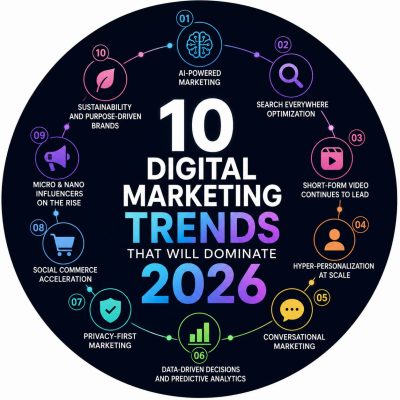
1. AI-POWERED CONTENT CREATION
AI-powered content creation is the process of using artificial intelligence tools to create, enhance, and optimize digital content quickly and effectively. Artificial Intelligence is transforming content creation by helping marketers generate blogs, social media posts, videos, and copy, and personalized campaigns faster while maintaining quality and relevance.
2. HYPER PERSONALIZATION
Customers expect personalization experiences Brands are using AI and Customer data to deliver customized content, product recommendations emails, and advertisements tailored to individual. Hyper- Personalization is marketing strategy that uses AI, data customer behavior to deliver highly personalized content, recommendations, and experiences to each individual user in real time. Instead of showing the same content to everyone, hyper-personalization shows content that is specifically tailored to a person's interests, preferences, and actions.
3. SHORT FORM VIDEO MARKETING
short form video marketing is the use of brief, engaging videos to attracts viewers, builds interest , and encourages customers to place orders. Short videos on platforms like Facebook, Instagram and YouTube continue to dominate audience engagement making video content a key growth strategy. A bakery posts a 30-second video showing how a cake is decorated from start to finish. this attracts viewers, builds interest, and encourages customers to place orders.
4. VOICE SEARCH OPTIMIZATION
Voice search optimization is the practice of making content easier for voice assistants to find and deliver as answers to spoken searches. With the increasing use of voice assistants, business must optimize their content for conversational and voice-based search to improve visibility.
5. AI CHATBOTS & CONVERSATIONAL MARKETING
AI chatbots and conversational marketing help businesses communicate with customers instantly, personally, and efficiently, improving engagement and sales. AI assistants helping customers find products and complete purchases. Advanced AI chatbots provide instant customer support, lead generation, and personalized interactions, improving customer satisfaction and conversion rates.
6. INFLUENCER MARKETING EVOLUTION
The evolution of influencer marketing has moved from celebrity promotion to authentic creator-driven engagement , where trust, relatability, and meaningful audience connections are more important than follower count alone. Brands are focusing more on micro & nano influencers who have highly engaged audiences who have highly engaged audiences and stronger trust within niche communities.
7. FIRST-PARTY DATA STRATEGIES
First-party data is the information a company collects directly from its customers through its own channels, such as websites, mobile apps, emails surveys, purchase history, and loyalty programs. As privacy regulations grow & third-party cooking decline, businesses are relying on first-party data collected directly from customer for targeted marketing.
8. SOCIAL COMMERCE GROWTH
Social commerce refers to the buying and selling of product directly through social media platforms such as Instagram, Facebook, and Pinterest. Social media platforms are becoming shopping destinations, allowing users to discover, review, and purchase products without leaving the app.
9. INTERATIVE CONTENT
Interactive content is digital content that encourages users to actively content that encourages users to actively participate rather than just consume information. It creates a two-way interaction between the brand and the audience, leading to higher engagement and better user experiences. Polls, quizzes, live streams, augmented reality experiences, and interactive videos are increasing engagement and creating memorable brand experiences.
10. SEARCH EXPERIENCE OPTIMIZATION (SEO)
Businesses are moving beyond traditional SEO by focusing on user experience, page speed, engagement & content quality to improve both ranking & conversions. and user experience (UX) to help websites rank higher in search results while providing a better experience for visitors. A travel website creates detailed destination guides, loads quickly, works well on mobile devices, and provides easy booking options. As a result, it ranks higher on search engines and converts more visitors into customers.