Claude and ChatGPT are similar in many ways: both are large language models that can understand and generate, help with coding, summarize information and assist with problem-solving. They differ in training methods, capabilities, interface features, and design choices.
Claude is an AI assistant. It’s designed for tasks such as:
- Answering Questions
- Writing and Editing Text
- Programing and Debugging Code
- Analyzing Documents
- Brainstorming Ideas
- Research Assistance
Claude AI is more than just a chatbot—it’s a powerful productivity and collaboration platform. With features like Projects, Co-Work, Models, Skills, Design support, Connectors, and Dispatch, users can streamline workflows, boost creativity, and accomplish tasks more efficiently. Whether you’re an individual professional or part of a team, learning to use Claude AI can significantly enhance your productivity in the modern digital workplace.
Why I Canceled [ChatGPT] and Switched to [Claude] ??
Artificial intelligence has become an essential part of my daily workflow, helping with writing, research, brainstorming, and productivity. While ChatGPT served me well for a long time, I eventually decided to cancel my subscription and switch to Claude. This wasn’t because ChatGPT is a bad tool—it’s still one of the best AI assistants available—but Claude aligned better with my personal needs and work style.
1. More Natural Writing Style
One of the first things I noticed about Claude was its ability to generate responses that felt more human and conversational. Whether I was drafting articles, creating marketing content, or brainstorming ideas, Claude often produced text that required less editing.
2. Better Long-Form Content Creation
I frequently work on blogs, reports, and detailed documents. Claude handled long-form writing smoothly, maintaining context and consistency throughout lengthy conversations and documents.
3. Stronger Document Analysis
Claude impressed me with its ability to read, summarize, and analyze large documents. This became especially useful when reviewing reports, PDFs, and research materials.
4. Simpler User Experience
The interface felt clean and focused. I could quickly start conversations, organize projects, and continue work without feeling overwhelmed by too many features.
5. Reliable for Professional Work
For content creation, marketing research, and business-related tasks, Claude consistently delivered structured and thoughtful responses that matched my expectations.
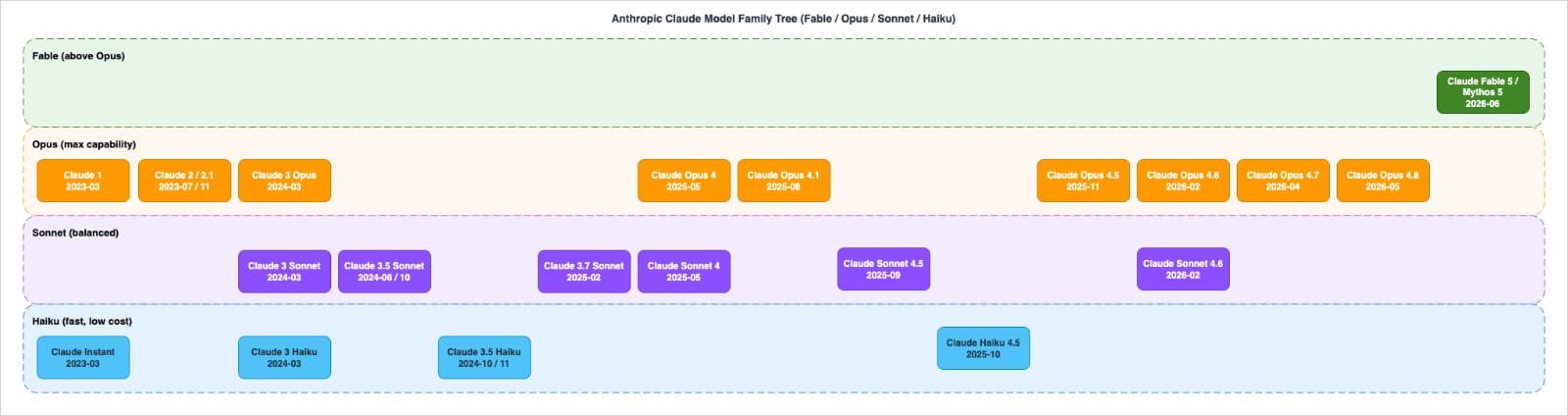
NEW VERSION OF CLOUDE AI
- CLAUDE OPUS 4.8 (released May 2026)– Anthropic ‘s most powerful generally available model, with improved reasoning, coding, and long-task perfomance.
- CLAUDE SONNET 4.6– the default model for most users, offering a balance of speed, intelligence, and cost.
- CLAUDE HAIKU– the fastest and most light weight model for quick tasks.
- CLAUDE FABLE 5 –is Anthropic ‘s newest and most powerful model, launched on June 9, 2026. Here’s a quick rundown:
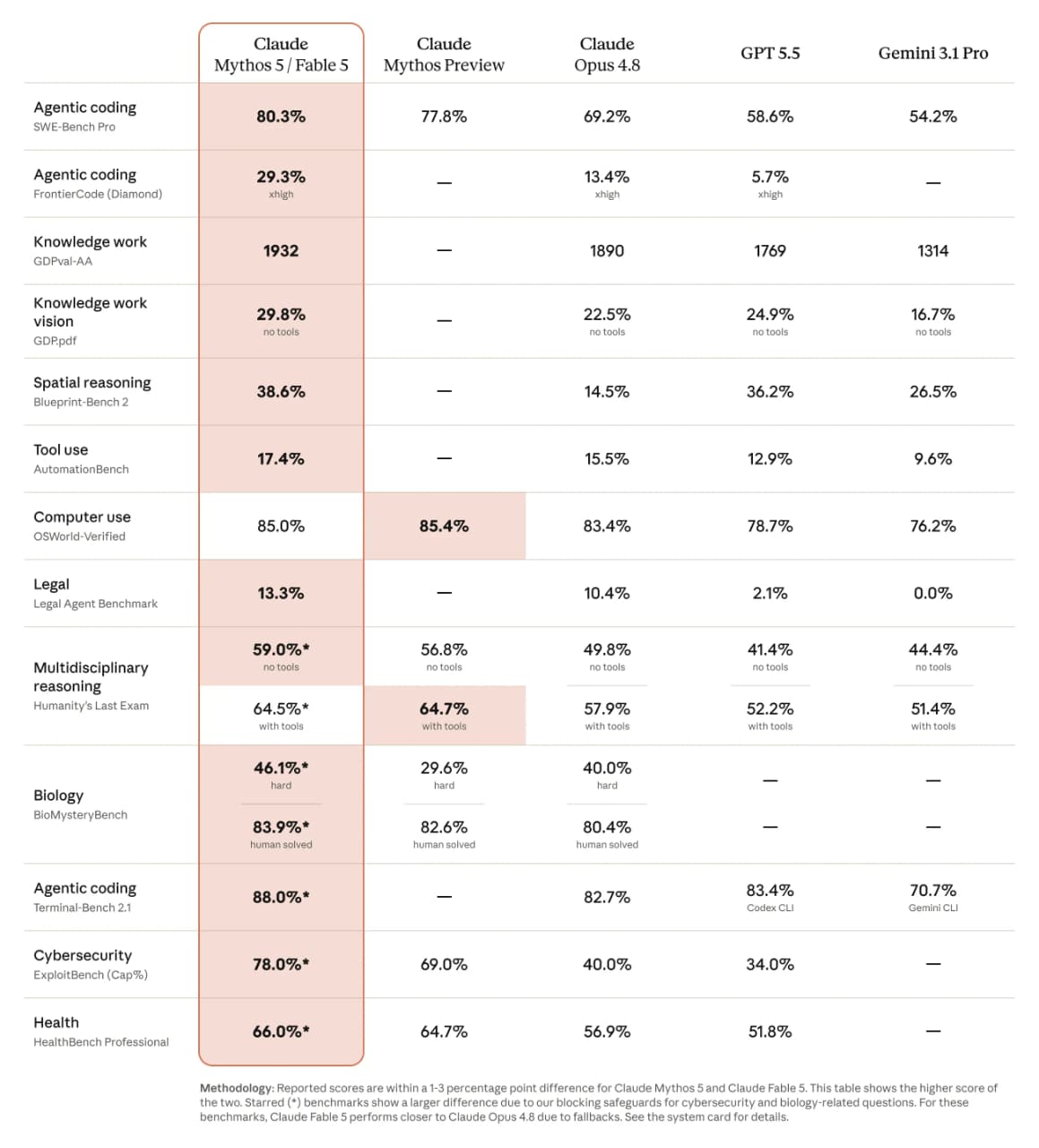
OPUS 4.8 CAPABILITES
The table below shows how Opus 4.8 compares to its predecessor and to other models on tests of coding, agentic skills, reasoning, and practical knowledge work tasks. Opus 4.8 launches alongside several new features. have control over the amount of effort Claude puts into a task. Claude Code has a new “dynamic workflows” feature that allows it to tackle very large-scale problems. And fast mode for Opus 4.8—where the model can work at 2.5× the speed—is now three times cheaper than it was for previous models.
![]()
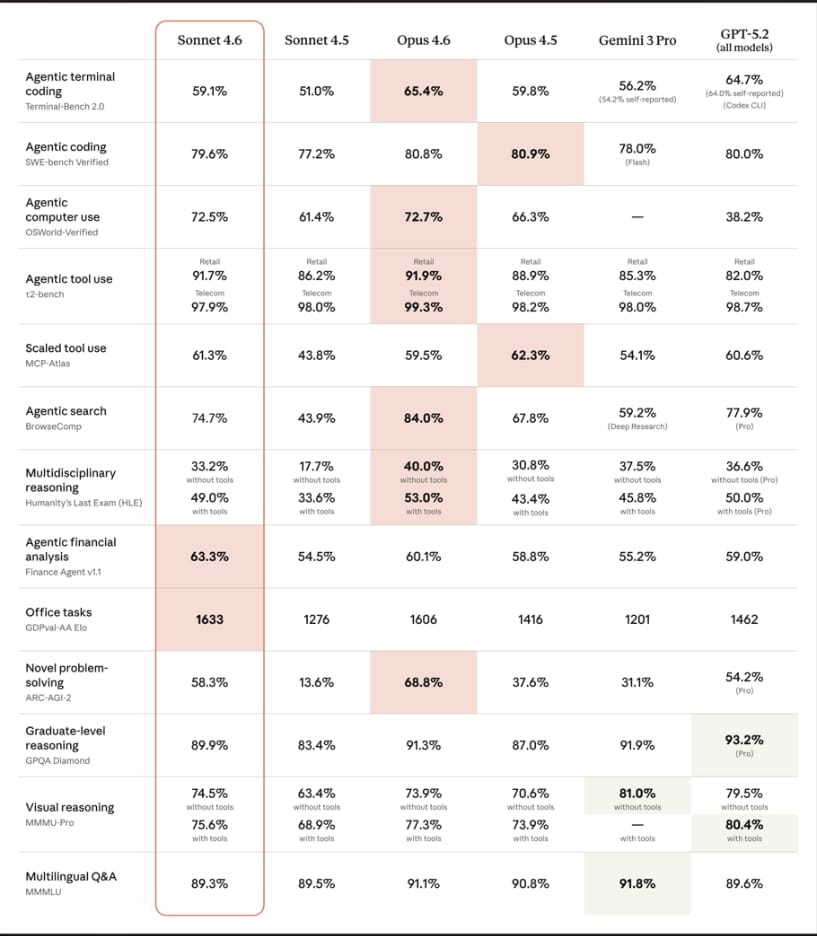
CLAUDE SONNET 4.6 DELIVERS FRONTIER INTELLIGENCE AT SCALE, BUILT FOR CODING, AGENTS, & ENTERPRISE WORKFLOWS.
A major highlight is its 1 million token context window (GA), matching the extended context capabilities of Claude Opus 4.6, alongside 128K maximum output. This enables teams to work across massive codebases, long financial models, multi-document analysis, and extended multi-turn workflows without fragmentation or repeated context resets.
Sonnet 4.6 also uses adaptive thinking and effort parameters, that gives Claude the freedom to think if and when it determines reasoning is required. This is an evolution from traditional extended thinking, optimizing both performance and speed. Teams can use effort parameters to better control quality-latency-cost tradeoffs.
Claude Haiku is one of Anthropic’s AI models —
the fastest and most compact model in the Claude family, designed for speed and efficiency.The current publicly available Claude Haiku model is Claude Haiku 4.5 (API string: `claude-haiku-4-5-20251001`). It’s positioned as the lightest, fastest model — ideal for:
– High-volume tasks where speed matters
– Simple, repetitive tasks like classification, summarization, or routing
It’s part of the Claude 4 family alongside Sonnet and Opus. For the latest details on pricing and capabilities.
CLAUDE FABLE 5/OPUS 4.5
A Mythos-class model that Anthropic has made safe for general use. Its capabilities exceed any model they’ve previously made publicly available, with exceptional performance in software engineering, knowledge work, vision, and scientific research.
Key strengths
It’s state-of-the-art at coding, knowledge work, vision, and computer use — designed for long-horizon, multi-day autonomous tasks that previous models couldn’t sustain.
Safety guardrails Without safeguards, Fable 5’s capabilities in areas like cybersecurity could be misused. So queries on certain high-risk topics instead receive a response from Claude Opus 4.8.
These safeguards trigger in less than 5% of sessions on average.
Pricing $10 per million input tokens and $50 per million output tokens, with a 1M token context window and up to 128k output tokens per request.
Mythos 5
Alongside Fable 5, Anthropic also launched Claude Mythos 5 — the same underlying model but with safeguards lifted in some areas, available only to a small group of vetted organizations through Project Glass wing.
LATEST PROJECTS AND WORKS
-
 Claude Design
Claude Design now sticks to your design system across projects, works fluidly with Claude Code, lets you edit directly on the canvas, and connects to more tools. It has a new home in the sidebar on the Claude desktop app Over one million people used it in its first week.
-
 Claude Code — Dynamic Workflows
Dynamic Workflows are available in research preview in the Claude Code CLI, Desktop, and VS Code extension for Max, Team, and Enterprise plans. A new “ultra code” setting sets effort to extra-high and lets Claude decide automatically when to use a workflow
-
 Apple Integration
Claude support is coming to Apple’s Foundation Models framework on iOS 27, i Pad OS 27, macOS 27, vision OS 27, and watch OS 27, letting developers integrate Claude with typed outputs directly into Swift UI views.
-
🌐 Project Glass-wing Expansion
Anthropic expanded Project Glass-wing to approximately 150 new organizations in more than 15 countries, focused on cybersecurity and critical infrastructure.
In April 2026, Claude-powered agents completed an open-ended AI safety research project autonomously — proposing hypotheses, designing experiments, running tests, and iterating with parallel agents. Claude now writes approximately 80% of Anthropic ‘s new production code.
Anthropic introduced the Services Track and Partner Hub of the Claude Partner Network in early June 2026, building an ecosystem of consulting and engineering firms deploying Claude across enterprises.
Final Thoughts
My decision to switch from ChatGPT to Claude came down to personal preference rather than one platform being universally better. Claude’s writing style, document handling, and workflow fit my needs more closely. However, the best AI assistant depends on how you use it. Many users may still find ChatGPT to be the better choice for their specific goals.
In the end, choosing an AI assistant is less about finding the “best” tool and more about finding the tool that works best for you.